Terpenes Explained A Manhattan Guide
Walk out onto Little Island and you smell the river, the plantings, the cut grass. That is terpenes doing their work. Same molecules, same job, in every jar on our shelf.
The Short Answer
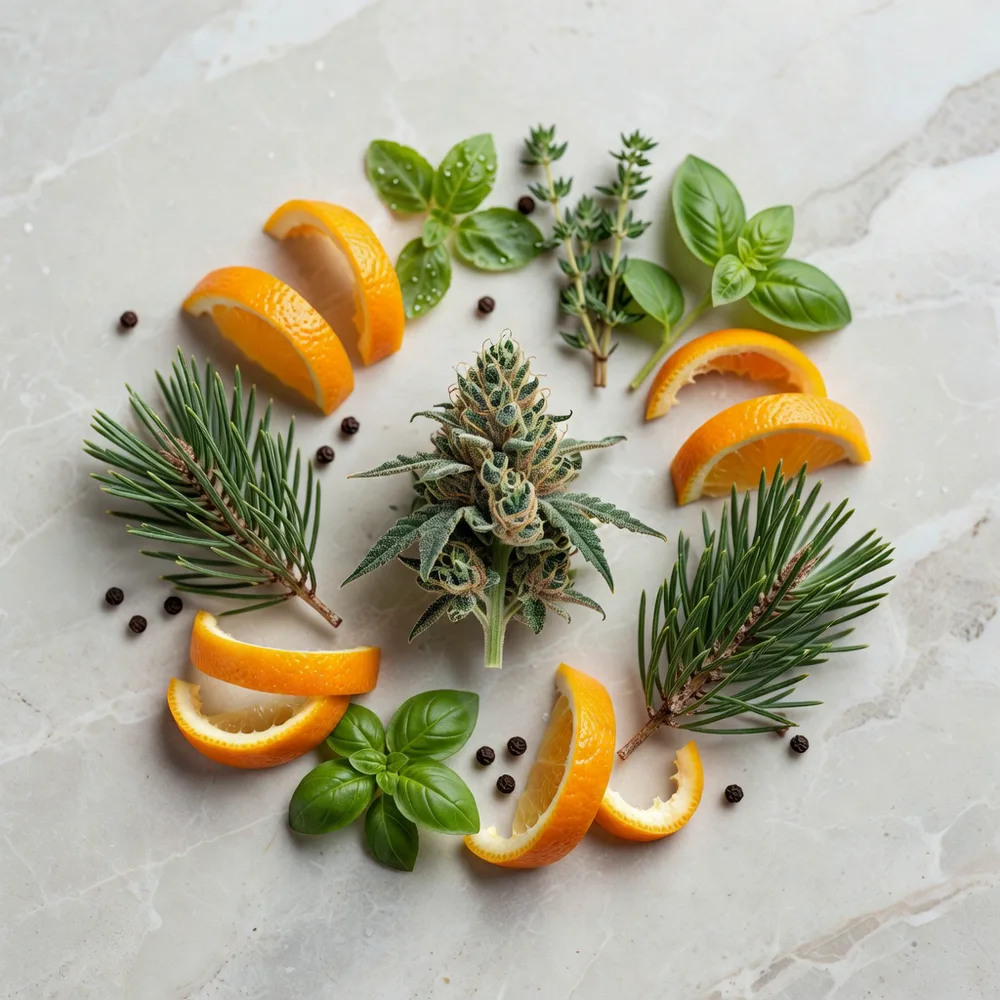
Terpenes are the aroma compounds in cannabis, the same family of molecules that make citrus peel smell like citrus and pine smell like pine. They are why two jars at identical THC can feel completely different.
The practical takeaway: smell the jar, read the terpene profile, and stop shopping by THC percentage alone. Terpenes are the better predictor of what you will actually get.
Step off the West Side and out onto Little Island, the small park perched on tulip-shaped stems over the Hudson at the edge of the Meatpacking District, and the first thing that hits you is not the view. It is the smell. Cut grass, river air, herbs and pine from the plantings. Every one of those smells is a terpene, an aroma molecule the plant makes. Cannabis makes them too, in quantity, and they are the most useful and most ignored thing on the label.
What Terpenes Are
Terpenes are aromatic compounds produced by an enormous range of plants. Lemon peel, pine needles, lavender, black pepper, hops, mango. When you smell any of those, you are smelling terpenes. Cannabis produces them in the same sticky resin glands that make cannabinoids, which is why a good jar smells like something specific rather than smelling like nothing.
Botanically, they exist to do a job for the plant: attract pollinators, repel pests, and provide protection. For a shopper in Manhattan, they do a different job. They tell you what you are actually about to experience, in a way the THC number never will.
Why They Matter More Than the Number
Here is the thing that reframes cannabis shopping once you see it. Take two jars, both 24% THC. One smells like lemon rind and cracked pepper. The other smells like ripe mango and damp earth. Those two will not feel the same, will not taste the same, and will not suit the same evening. Same number. Completely different jar.
THC percentage tells you roughly how strong something is. Terpenes tell you what kind of strong. That is why the old shorthand of indica and sativa keeps letting people down, as we cover in our indica vs sativa vs hybrid guide, and why chasing the highest THC percentage is such a reliable way to end up with something harsh you do not enjoy.
The Ones You Will Actually See
There are well over a hundred terpenes in cannabis, but a handful do most of the work and show up on most lab reports. These are the names worth knowing:
| Terpene | Smells like | Also found in |
|---|---|---|
| Myrcene | Earthy, musky, ripe fruit | Mango, hops, thyme |
| Limonene | Bright citrus, lemon rind | Citrus peel, juniper |
| Caryophyllene | Peppery, spicy, woody | Black pepper, cloves, cinnamon |
| Pinene | Sharp pine, fresh forest | Pine needles, rosemary, basil |
| Linalool | Floral, soft lavender | Lavender, coriander |
| Terpinolene | Fresh, herbal, faintly sweet | Apples, nutmeg, tea tree |
| Humulene | Hoppy, woody, earthy | Hops, sage, ginseng |
Myrcene is the most common terpene in cannabis by a wide margin. Limonene and caryophyllene are close behind.
Reading a Terpene Profile
On a lab report, terpenes are listed by percentage, and the numbers look small next to a THC figure. That is normal and it is not a knock. Here is roughly how the scale reads on flower:
Total terpene content on flower. A 2% jar is not weak because 2 is smaller than 24. Different scale, different job.
What you are looking for is the top two or three terpenes by percentage, because those define the character. A jar led by limonene and pinene is a bright, sharp thing. A jar led by myrcene and linalool is a soft, heavy one. Full lab reports live on the COA, and our guide on how to read a COA shows you where to find that section.
The Entourage Effect
You will hear this phrase in every dispensary in Manhattan, so it is worth defining honestly. The entourage effect is the idea that cannabinoids and terpenes work together, and that the whole plant produces something different from isolated THC. It is a well-established observation among people who use cannabis and an area where the research is still developing rather than settled.
What is not in dispute is the practical part: full-spectrum products that keep the terpenes taste and smell dramatically better than stripped, distillate-based ones. That is exactly the difference behind live resin, which is prized precisely because the process preserves the terpenes that other methods burn off.
This is general information for Manhattan shoppers, not medical advice. Terpene research is ongoing and cannabis affects everyone differently. Always read your product label and follow New York State law.
Why Two Jars of the Same Strain Smell Different
Here is something that trips people up constantly. You loved a strain last month, you buy the same name again, and it is not the same. You did not imagine it, and nobody swapped anything on you.
Terpene production is enormously sensitive to how a plant was grown. Light, temperature, nutrients, when it was harvested, and above all how it was dried and cured all shape the final profile. Two growers can plant genetically identical cuttings and finish with jars that smell meaningfully different. A rushed cure in particular strips terpenes, which is why cheap flower so often smells like hay rather than like anything.
This is the strongest argument for reading the actual profile on the actual batch instead of trusting a strain name. The name is a rough starting point. The lab report is the truth, and our guide on how to read a COA shows you where to find it.
Terpenes and the Small Apartment Problem
A very Manhattan consideration, this one. Terpenes are what you smell, which means they are also what your hallway smells. A loud, gassy, high-terpene jar is a joy to open and extremely difficult to be discreet about in a pre-war walk-up with thin doors.
If that matters where you live, terpene awareness cuts both ways. Some profiles are simply louder than others, and formats change the equation entirely: edibles carry no smell at all, and vapes are far quieter than flower. None of that means buying worse product. It means knowing that the same molecules delivering your flavor are also announcing your evening to the stairwell.
Shopping by Nose
The single best terpene tool you own is your face. A few honest tactics:
- Smell first, always. If a jar smells like nothing, it will probably taste like nothing.
- Chase what you like. If a citrus-forward jar worked for you, look for limonene on the next label. That is a far better signal than a strain name.
- Learn your top three. Once you know which terpenes you gravitate to, shopping anywhere gets easy.
- Store it properly. Terpenes are volatile and they evaporate. Heat, light, and air strip a jar of exactly what you paid for.
- Ask. Tell a budtender what smells you love, not what THC number you want. You will walk out with something better.
Terpenes carry through to vapes and concentrates too, which is why a live resin cart tastes like the plant and a cheap distillate cart tastes like a candle. Come smell a few jars at 862 9th Ave, or get them delivered free anywhere in Manhattan, from the Chelsea galleries to the top of the island.
Find Your Profile in Hell's Kitchen
The fastest way to understand terpenes is to smell three jars side by side. Come to Cannadreams at 862 9th Ave in Hell's Kitchen, blocks from Times Square, and our budtenders will pull the profiles and let your nose decide. Or shop online for free same-day delivery across Manhattan.
- 862 9th Ave, New York, NY 10019 (Hell's Kitchen, Manhattan)
- (646) 398-8276
- Mon-Wed 10am-12am • Thu-Fri 10am-1am • Sat 11am-1am • Sun 11am-11pm
- NY Office of Cannabis Management • License #OCMCAURD-2022-000407
Best-Selling Products
Our most-loved cannabis products in Manhattan right now, updated live from our menu. Order for same-day pickup or delivery from our Hell's Kitchen dispensary at 862 9th Ave near Times Square.
New Arrivals
Fresh drops on the Cannadreams menu. The newest flower, edibles, vapes, and more, added as they land in stock.
Shop by Category
From top-shelf flower to infused pre-rolls, vapes, edibles, concentrates, and drinks. Every category, live from the Cannadreams menu.
Deals
Best SellersConcentrates
Best SellersTinctures
Best SellersTopicals
Best SellersBeverages
Best SellersCannabis Terpenes, Answered
Find Your Terpenes in Manhattan
Lab-tested flower with full terpene profiles. Shop Cannadreams at 862 9th Ave in Hell's Kitchen, or get free same-day delivery across Manhattan.
Shop Flower